


Are Standard Firewalls Dead? The Truth About Network Security Services in 2026
If you walk into most small to mid-sized businesses today and ask about their cybersecurity, they’ll point to a flashing box in the server room and say, “We’re good, we have a firewall.”
In 2016, that might have been enough. In 2026? That’s like protecting a glass house with a screen door.
At The FNS Group, we’ve seen the landscape shift dramatically over the last few years. The question isn't really whether firewalls are "dead": it's that the way we define network security services has fundamentally changed. The old "moat and castle" approach, where you build a big wall around your office and assume everything inside is safe, is officially obsolete.
Why? Because your office isn't just in a building anymore. It’s in your employees’ living rooms, it’s in a Starbucks in another state, and it’s living across three different cloud providers.
The Death of the Perimeter
The traditional firewall was designed for a world where your data lived on a local server and your employees sat at desks plugged into a wall. You’d set up a perimeter, filter what came in and out, and call it a day.
Today, that perimeter has vanished. With the rise of hybrid work and remote access solutions, your "network" is everywhere. When your team accesses files from a laptop at home, they aren't behind your office firewall. If they’re using SaaS tools like Microsoft 365 or Salesforce, that data isn't even touching your local hardware.
If your security strategy starts and ends with a hardware appliance, you have a massive blind spot. Modern network security services have had to evolve to follow the user and the data, rather than just guarding a physical location.

Why "Standard" Isn't Enough Anymore
When people say firewalls are dead, they’re usually talking about "Stateful Inspection" firewalls: the standard ones that just look at source, destination, and port. Here is why those legacy systems are failing in 2026:
The Encryption Problem: Over 90% of web traffic is now encrypted (TLS 1.3). Legacy firewalls are often blind to this traffic. If the firewall can’t see what’s inside the encrypted "envelope," it can't stop the malware hiding there.
The AI Arms Race: Hackers are using AI to automate attacks and find vulnerabilities faster than any human could. A static firewall with a list of "bad IP addresses" can't keep up with an AI that changes its signature every ten seconds.
Lateral Movement: Once a hacker gets past a traditional perimeter firewall (usually through a phishing email), they have free rein. Standard firewalls weren't built to monitor traffic inside the network, only what goes in and out.
To see if you’re falling into these common traps, check out our guide on 7 mistakes you’re making with network security services.
Enter Zero Trust: The New Standard
If the "moat and castle" is dead, what replaced it? The industry has moved to a Zero Trust Architecture.
The philosophy is simple: Never trust, always verify.
In a Zero Trust environment, it doesn't matter if you’re sitting in the office or a coffee shop. The network assumes you are a threat until you prove otherwise through multi-factor authentication (MFA), device health checks, and identity verification.
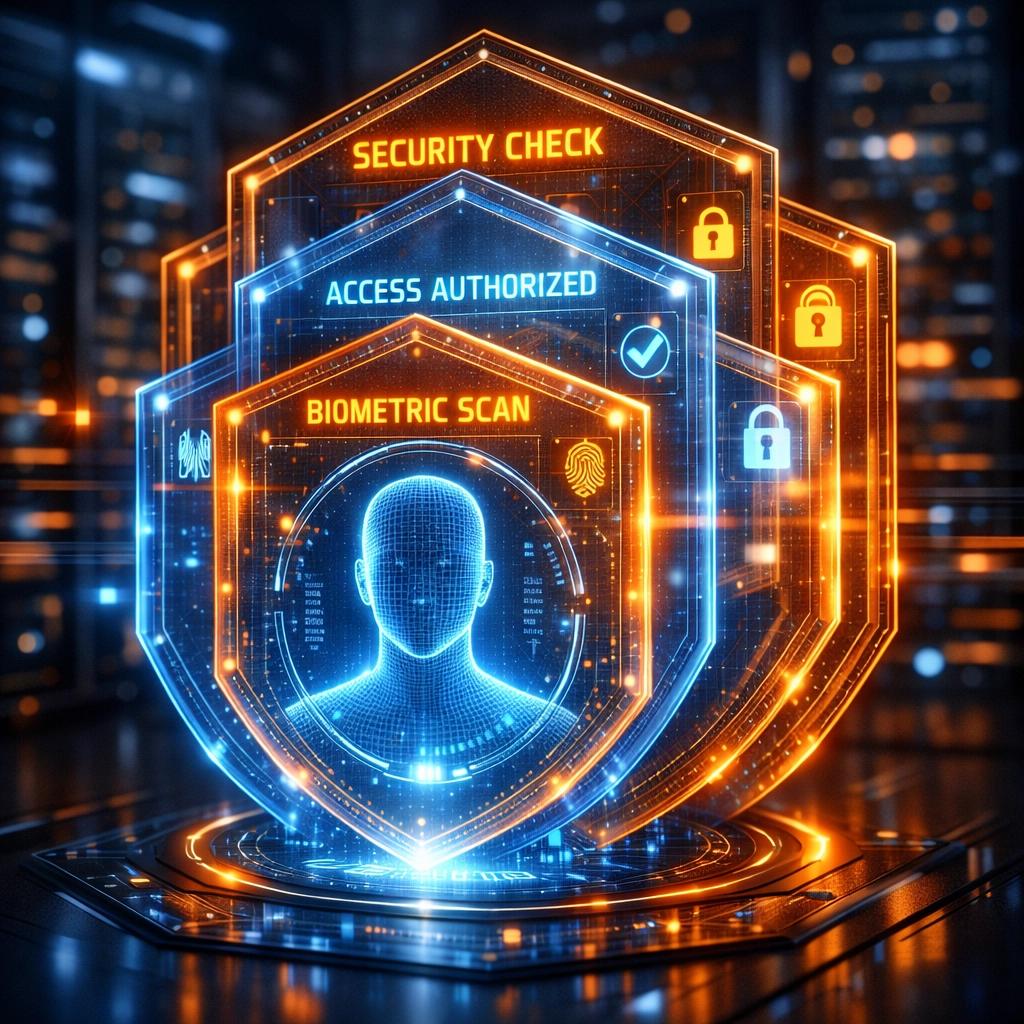
Visual Suggestion: A conceptual diagram of Zero Trust security showing multiple verification layers, branded with a subtle Red Sun logo (https://cdn.marblism.com/Cn5TRvY4P7_.png) in the corner.
At The FNS Group, we integrate these principles into our managed IT services. We stop looking at the network as a single "safe" zone and start treating every user, device, and application as its own micro-perimeter.
The Evolution: From Firewalls to SASE
Firewalls haven't disappeared; they’ve moved to the cloud. You might hear us talk about SASE (Secure Access Service Edge). This is the 2026 version of network security.
Instead of routing all your traffic back to a physical box in your office (which slows everything down), SASE moves the security functions to the cloud. This means your security policies follow your employees wherever they go. Whether they are at home or in the office, they get the same level of protection without the performance lag.
Our Proactive Approach to Modern Security
We don't just "install" security; we manage it. Our network security services include:
AI-Driven Threat Prevention: Using machine learning to identify and block suspicious behavior before it becomes a breach.
Encrypted Traffic Inspection: Safely peering into encrypted streams to ensure no hidden payloads are entering your environment.
Microsegmentation: Dividing your network into small, isolated zones so that if one device is compromised, the infection can't spread to your entire business.
Continuous Monitoring: 24/7 oversight to ensure your defenses are evolving as fast as the threats.
Firewalls Are Still Part of the Team
While the "standard" standalone firewall might be a relic, the function of a firewall is still critical. In 2026, the firewall has become a software-defined component of a larger security stack.
Think of it this way: You wouldn't rely only on a deadbolt to protect your home. You’d want a deadbolt, but also a security camera, a motion sensor, and maybe a smart doorbell. The modern firewall is the deadbolt: it’s necessary, but it’s just one part of a comprehensive system.
Modern firewalls (often called Next-Gen Firewalls or NGFWs) are now deeply integrated with identity management. They don't just ask, "Is this IP address allowed?" They ask, "Is David allowed to access the accounting folder from an unrecognized laptop in Bulgaria at 3:00 AM?"

Visual Suggestion: A high-tech operations center screen showing real-time network traffic analysis, with the Red Sun logo (https://cdn.marblism.com/Cn5TRvY4P7_.png) visible on the UI.
How to Tell if Your Security is Outdated
If you’re unsure where you stand, ask yourself these three questions:
Do my remote employees have to use a slow VPN to be "secure"? If so, your architecture is likely 5–10 years behind.
Does my firewall talk to my antivirus and my identity provider? In 2026, these systems must work as a single ecosystem.
When was the last time my security rules were audited? Stale rules are one of the biggest entry points for attackers.
Choosing the right partner to navigate this complexity is essential. If you're a small business looking for clarity, take a look at our comparison guide for 2026 IT support.
The FNS Group Partnership
We believe in being a proactive partner, not just another vendor. We don't just sell you a box and walk away. We design, monitor, and manage your entire digital environment to ensure that while the "perimeter" may be gone, your data remains impenetrable.
Our mission is to provide the ease and productivity your team needs, backed by the stability and cost-savings that come from avoiding a catastrophic breach. We predict threats, prepare your infrastructure, and manage the complexity so you can focus on growing your business.

Visual Suggestion: A professional team collaborating in a modern office, showing a sense of partnership and security, with a Red Sun logo (https://cdn.marblism.com/Cn5TRvY4P7_.png) on a wall-mounted display.
Summary: The Truth About 2026
Are standard firewalls dead? Yes. The old-school, set-it-and-forget-it hardware boxes are no longer capable of protecting a modern business.
However, network security services are more alive and vital than ever. By embracing Zero Trust, cloud-native security, and AI-driven monitoring, you can build a defense that is actually ready for the threats of today and tomorrow.
Don’t wait for a breach to realize your "flashing box" isn't doing its job. Let’s talk about building a security strategy that actually fits the way you work in 2026.
Explore our full range of network security and IT services or learn more about why businesses choose us to keep their operations running smoothly and securely.
Comments